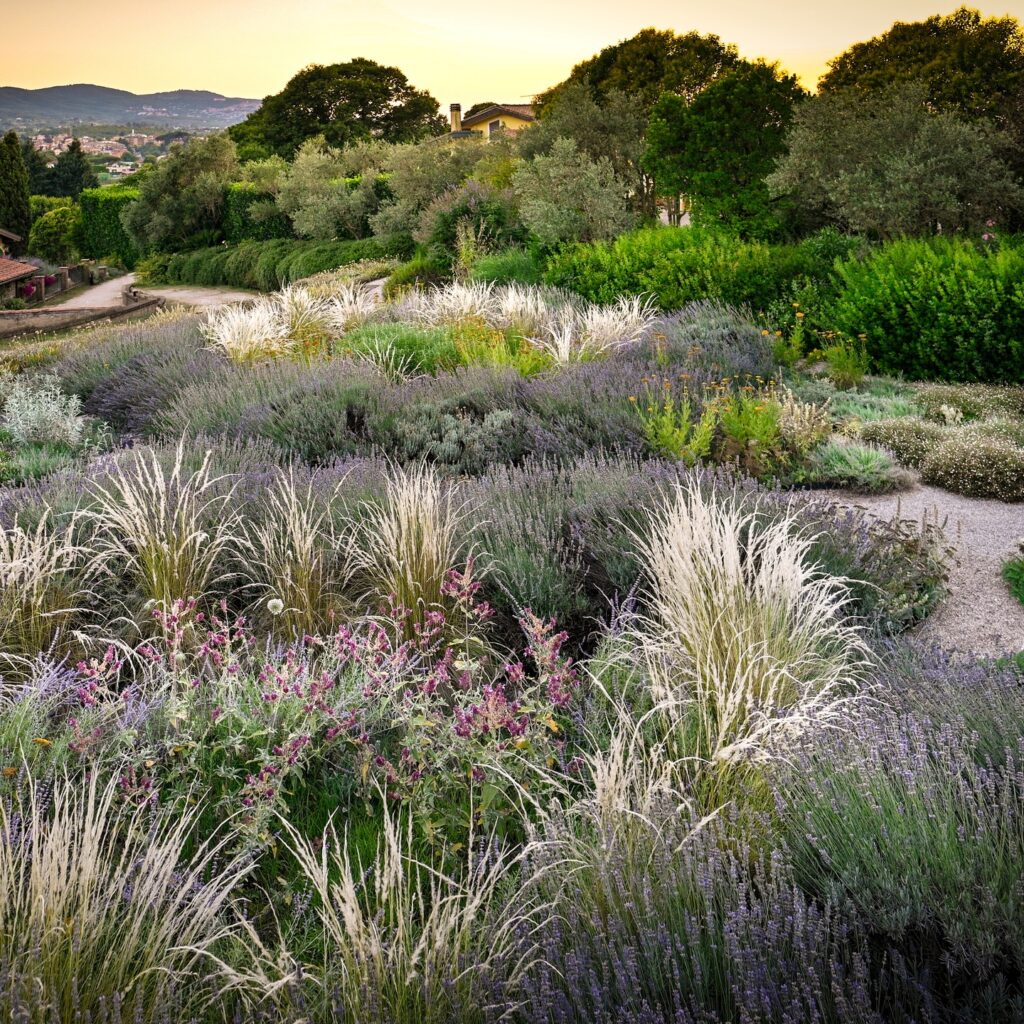
The Dutch New Wave Movement
Naturalistic Planting for Sustainable Landscapes
The Dutch New Wave movement represents a transformative approach to garden and landscape design, redefining outdoor spaces through the integration of ecology, artistry and sustainability. Often described as naturalistic planting, this style demonstrates how richly layered, visually dynamic gardens can thrive with minimal intervention while actively supporting biodiversity.
Rather than relying on rigid geometry or high-maintenance displays, Dutch New Wave gardens embrace fluid forms, seasonal change and ecological function. The result is landscapes that feel natural, resilient and alive—spaces that evolve gracefully over time.
Origins and Influence
The movement emerged in the Netherlands and Germany during the 1970s and 1980s, when influential designers such as Mien Ruys, Karl Foerster, and Henk Gerritsen began challenging traditional formal planting styles. Their work explored more organic, plant-led compositions that reflected natural plant communities.
The global recognition of the movement was later advanced by Dutch garden designer Piet Oudolf, whose pioneering work brought naturalistic planting into public landscapes worldwide. Oudolf’s designs—now seen in parks, gardens and civic spaces internationally—demonstrate how ecological sensitivity and strong visual impact can coexist.
Planting Character and Aesthetic
Dutch New Wave planting is characterised by:
- Flowing curves and layered plant arrangements
- A diverse mix of grasses, flowering perennials, shrubs, trees and bulbs
- Emphasis on texture, structure and movement, rather than short-lived floral displays
Plants are selected for resilience, longevity and multi-season interest, ensuring the garden remains visually engaging throughout the year—from spring emergence to winter structure.
This approach replaces the rigidity of traditional garden layouts with compositions that feel immersive, dynamic and natural.
Biodiversity and Habitat Value
A defining strength of the Dutch New Wave approach is its ecological contribution. These landscapes:
- Provide nectar and pollen for bees, butterflies and other pollinators
- Offer shelter and overwintering habitat for beneficial insects
- Create refuges for reptiles, birds and small mammals
Standing seed heads, dense grasses and layered planting ensure that wildlife support continues well beyond the flowering season.
Core Design Principles
Matrix Planting System
At the heart of the design is a matrix planting system, where robust, often grass-based plantings form a continuous background. This matrix visually unifies the garden and provides ecological stability.
Primary and Secondary Plants
Planted within the matrix are drifts or groups of strong “primary” flowering plants that provide seasonal colour and structure. Ornamental grasses weave through the entire scheme, softening transitions and reinforcing cohesion.
Seasonal Structure
Perennials are selected for both resilience and architectural form:
- Low spring perennials initiate the seasonal display
- Taller species flower through summer and autumn
- In winter, frosted foliage and seed heads remain, offering visual interest and wildlife shelter
Plant Form and Texture
Designs deliberately combine a wide range of flower and foliage forms—daisies, spires, globes, umbels, spiky and airy “see-through” plants—enhancing depth, texture and movement.
Sustainable Maintenance Cycle
Maintenance is ecological and cyclical rather than intensive:
- In early spring, beds are fertilised and plants are cut back before new growth emerges
- Spent plant material is retained onsite as natural mulch
- Cut-back occurs in stages, ensuring continuous habitat for wildlife
This closed-loop system reinforces soil health, conserves resources and supports biodiversity.
Environmental Benefits
Dutch New Wave planting delivers significant environmental advantages:
- Dense plant cover suppresses weeds naturally
- Shaded soils reduce heat stress and protect roots
- Massed foliage buffers plants against frost damage
- Grasses, shrubs and perennials improve water retention, reduce runoff and enhance water efficiency
A Living Example of Sustainable Beauty
The Dutch New Wave movement demonstrates that beauty and sustainability are not opposing ideals. Through thoughtful plant selection, ecological design and seasonal acceptance, this approach creates landscapes that are resilient, biodiverse and visually compelling—proving that naturalistic gardening can be both practical and profoundly inspiring.